
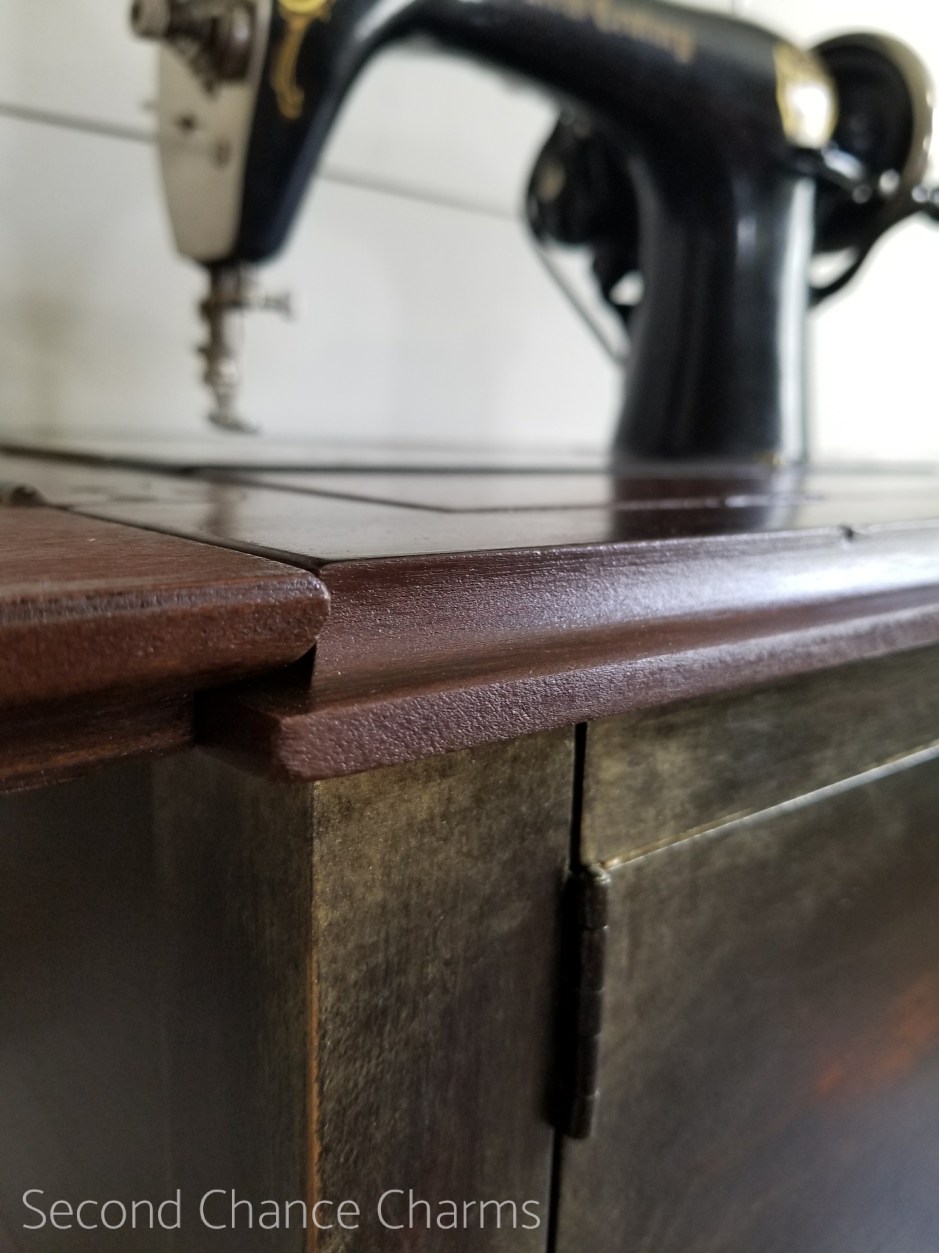
I remember the day I found this fellow. I was in my shop working on a Saturday and my neighbor calls me. He tells me he is at Goodwill and they were having 50% sale on all furnishings and that “you need to come down here, I think this may be something you want”. I loaded up and ran over there. People were everywhere looking at so many goodies. There sat a little table that no one thought twice of. I thought to myself, well isn’t that cute. As I got closer and was checking him out I saw that he was a sewing machine. Of course- anything vintage has my heart. So I went ahead and purchased him along with a few other items.


When I brought him home I didn’t think about plugging him in, the chances of him working were slim to none and to gut him would be a project for another day. So I stuck him off in the corner- and thought, I’ll get to him later. Weeks past and I figured, it’s time to check him out. I plugged him in the outlet and couldn’t believe it! I quickly grabbed my phone and made a short little video that I posted over on Second Chance Charms (Behind The Scenes) Furniture.
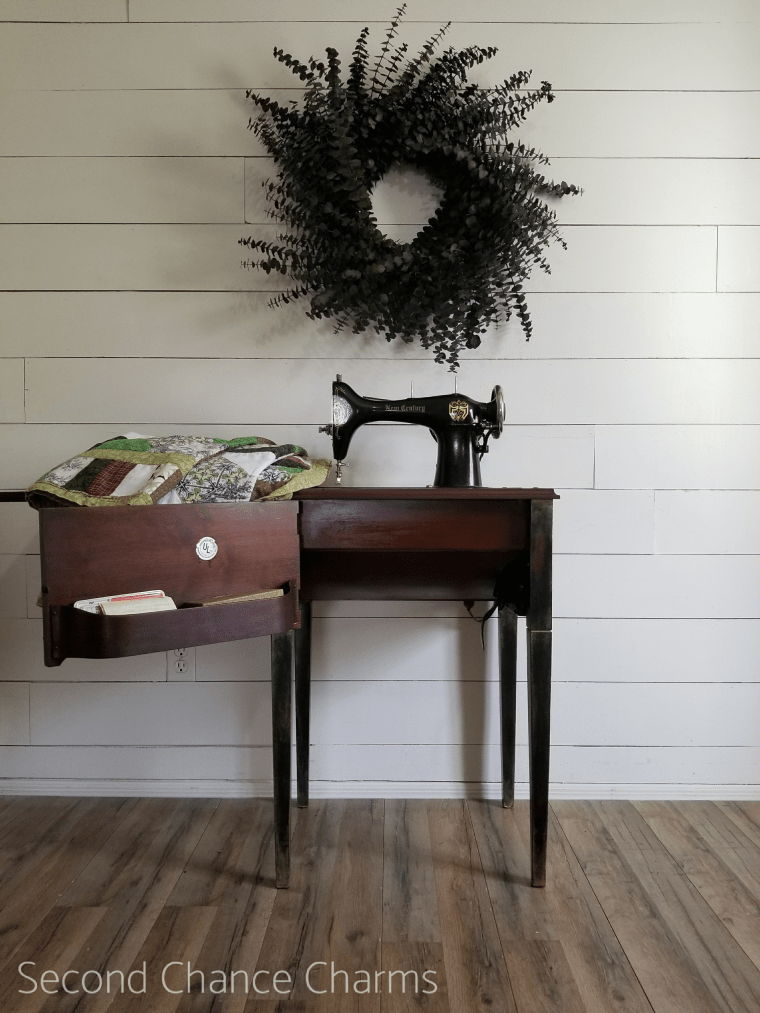
I also found some exciting little things like a maintenance receipt from 1983 and sewing footers, needles and the like.


After much late night research on the web and with the help of a lady by the name of Cyndy in Nowra, New South Wales (You can view her site at Cyndy Kitt Productions) we came to the conclusion that this vintage New Century sewing machine cabinet is from the 1930’s by Marcus Clark & Co.
Of course- I must share some history on this old timer:
From a modest start in the Sydney suburb of Newtown in 1883, Marcus Clark & Co rose to become one of the city’s largest department stores with a network of branches in towns and suburbs across Australia. Henry Marcus Clark (1859-1913) established the company when he purchased the drapery business of his former employer, John Kingsbury. The business quickly expanded, trebling itself within five years, and soon opened new stores in Marrickville and Bondi Junction. In the Sydney Sands directory for 1894, Marcus Clark was listed as a “wholesale and retail draper, tailor, milliner, boot warehouse and fancy repository; the largest, best lighted and most comfortable establishment in Newtown, the floor space covering nearly an acre.” In 1896 Marcus Clark & Co opened a store closer to the city on the corner of George & Harris Street near Railway Square. It was, however, a slightly different concept as it stocked less expensive wares than its other stores and was given the name Bon Marche, a reference to the famous Parisian department store (but also the name of the store in Liverpool, England where Henry Marcus Clark was apprenticed). The success of the store led to a larger building being constructed on the site in 1909 but also influenced Marcus Clark to build more stores around Railway Square. Marcus Clark & Co made arguably its biggest and most lasting mark on Sydney in 1906 when the James Nangle-designed Central Square building, known as the flat-iron building, was erected on the corner of George and Pitt Streets, Railway Square, on the site of an early toll-gate. For all visitors entering the city from the south it was an impressive sight: a landmark nine-storey structure of 150 feet in height, the tallest in Sydney at the time. It was probably also about this time that the company’s stock expanded greatly: a catalogue from around 1910 (TCQ 749.20491 CLA) lists departments ranging from manchester to ironmongery, musical instruments to stationery.
Henry Marcus Clark’s early experience in Newtown may have alerted him to the advantages of regional and suburban retailing. Although a number of retailers opened branches outside the city after World War II, Marcus Clark & Co’s growth was unprecedented: the 1915 Sydney Sands directory listed stores in Newtown, North Sydney, Armidale, Dubbo, Goulburn, Gunnedah, Inverell, Lismore, Lithgow, Narrabri, Newcastle, Nowra, Tamworth and Wollongong. Many of these country locations were actually modest sized ‘sample rooms’ rather than large stores. However, they could still provide customers with personalized service and competed directly with city retailers like Anthony Hordern & Sons which made large profits from the lucrative mail order trade. Country customers could order goods and have them shipped from Marcus Clark & Co’s city stores, conveniently located next to the parcels post office at Central Railway. Many department stores of the early twentieth century had their own manufacturing facilities. Marcus Clark & Co’s manufactures included timber and cane furniture, quilts and bedding. The colourful 1920s ‘New Century’ down and kapok quilts catalogue (TC 643.53 CLA) emphasised the company’s local production. Marcus Clark & Co emphasised value for money, like many department stores of the day. The preface to a furniture catalogue from around 1914 (TC 749.20491 CLA) states that “you can very likely get more timber and upholstery for your money – but nowhere can you purchase more lasting satisfaction and furniture friendliness.” By this date, a new furniture showroom had been constructed, also on Railway Square, to be extended in 1928 by architects Spain & Cosh into another impressive 10-storey building with clock tower. On the death of Henry Marcus Clark in 1913, his son Reginald Marcus Clark (1883-1953), who was knighted in 1939 and then known as Sir Marcus Clark, took over the business. The company continued in family hands until taken over by rival department store, Waltons, in 1966. Marcus Clark’s Bon Marche store had already closed in 1961 and moved to the Sydney suburb of Liverpool and the Railway Square store closed in July 1965.

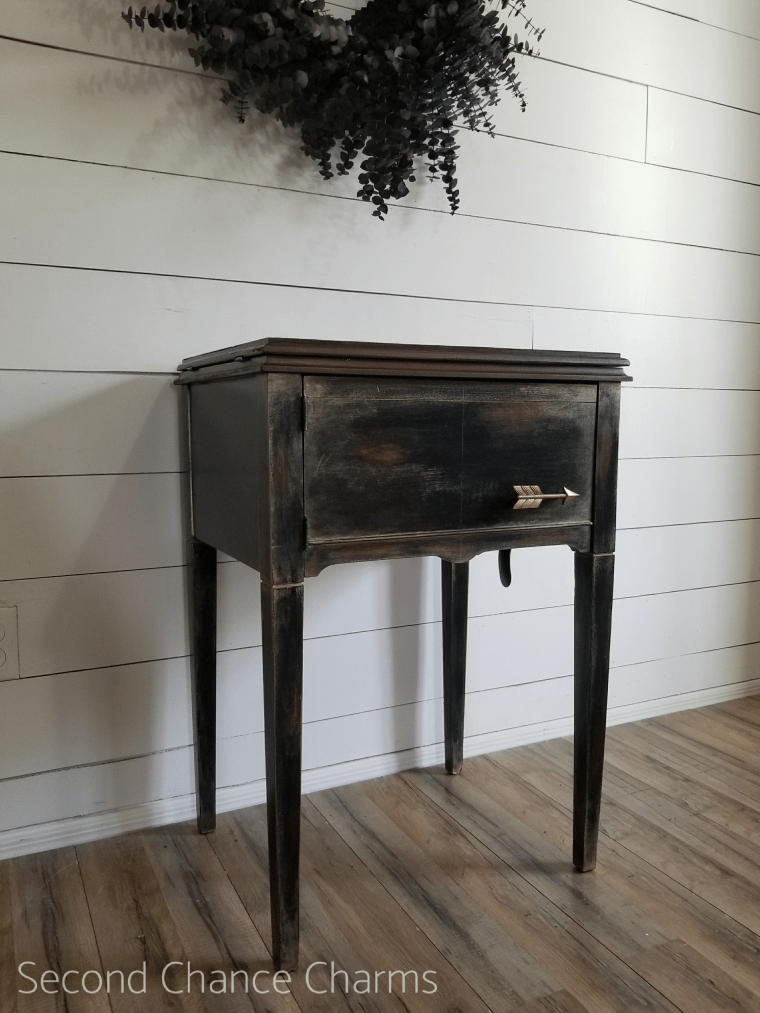
Refinishing him to his stellar original days was the first option. However, with his black and gold sewing machine I wanted to incorporate those colors.
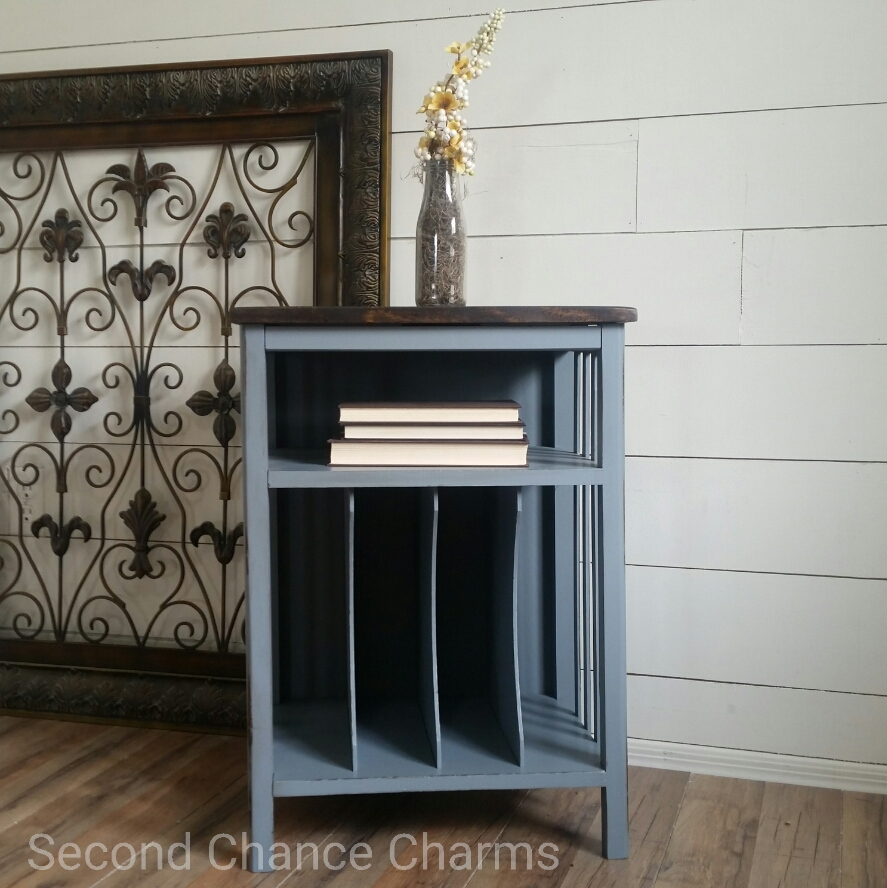
Refinished in Sherwin-Williams Tricorn Black and heavily glazed in gold. Distressed for an added vintage look. The top and inside are stained in Minwax Chestnut to match his original days. I added a Gold Metal Arrow Handle from Hobby Lobby to help open the little compartment door he has to hold all sewing necessities. The working rotary sewing machine operates via a pedal at thigh height, which you just lean into with your leg. Closed cabinet measures, 21.5″ wide x 17″ deep x 30.5″ tall.
He is available for purchase, to view details please click over to Shop Selections.










































 Second Chance Charms